
Hip
Hip Anatomy
-
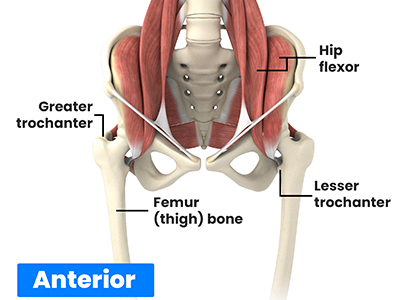
The hip joint is the largest weight-bearing joint in the human body. It is also referred to as a ball and socket joint and is surrounded by muscles, ligaments, and tendons. The thigh bone or femur and the pelvis join to form the hip joint.
Procedures
-
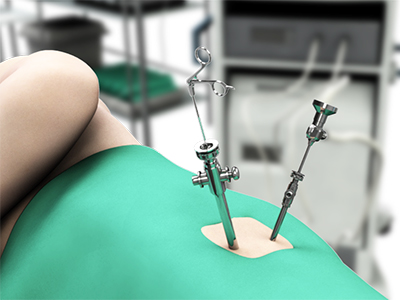
Hip arthroscopy, also referred to as keyhole or minimally invasive surgery, is a surgical procedure in which an arthroscope is inserted into your hip joint to check for any damage and repair it simultaneously.
-
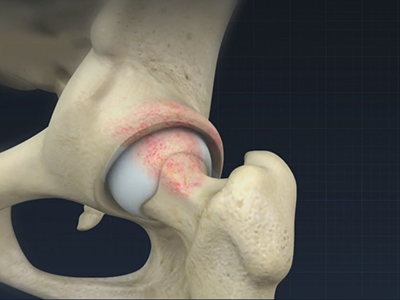
Femoroacetabular osteoplasty is the surgical reshaping of the protruding bony surface of the femur or acetabulum of the hip joint.
-
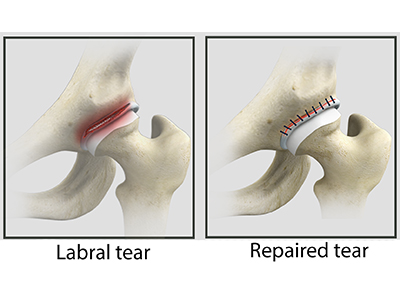
Hip labral repair is a surgical procedure to treat hip labral tears. A hip labral tear is a partial or complete rupture of the hip labrum, a ring of fibrous cartilaginous tissue that surrounds the socket of the hip joint.
-
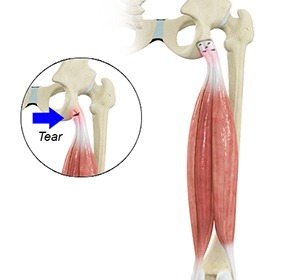
Hamstring injuries primarily occur when the muscle is exposed to extreme strain; when it is stretched beyond its ability or when it must withstand a sudden load. This is commonly seen while sprinting – the hamstring muscles must bear the body’s entire weight and experience extreme contraction as you push off the ground to move forward.
-
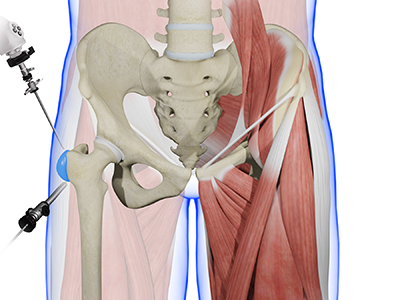
Trochanteric bursitis, also known as greater trochanteric bursitis or hip bursitis, is a painful condition caused by inflammation of the trochanteric bursa that overlies the greater trochanter (bony prominence at the outer side of the hip).
-
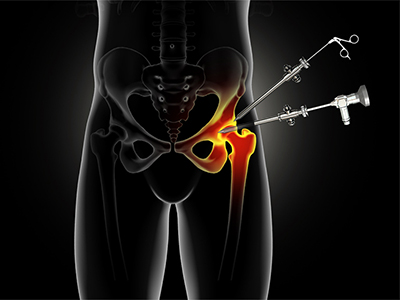
Hip surgery is a surgical procedure for the treatment of a hip injury or hip condition. The procedure involves repairing diseased or damaged structures of the hip joint in order to eliminate pain and restore normal hip function.
-
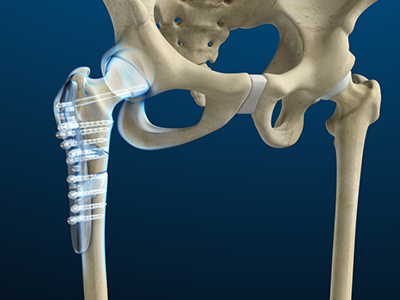
Hip fractures involve a break that occurs near the hip in the upper part of the femur or thigh bone. The thigh bone has two bony processes on the upper part - the greater and lesser trochanters.
-
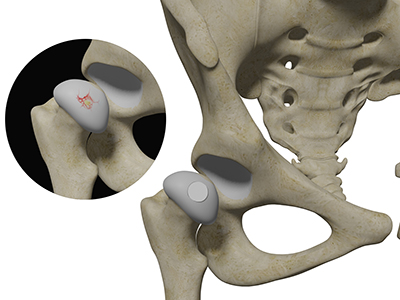
Hip cartilage restoration is a surgical technique to repair damaged articular cartilage in the hip joint by stimulating new growth of cartilage or by transplanting cartilage into areas with defects in order to relieve pain and restore normal function to the hip.
-
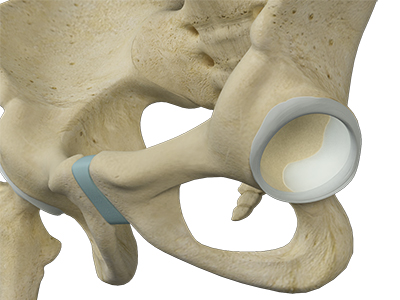
The hip joint is one of the body's largest weight-bearing joints and is the point where the thighbone (femur) and pelvis (acetabulum) join.
-
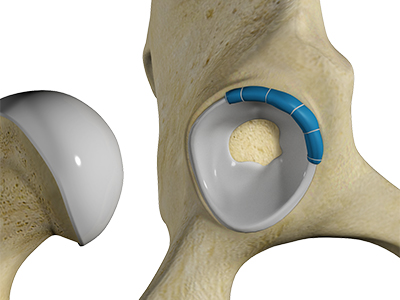
Hip labral reconstruction is a surgery that involves the use of a graft to replace the damaged portion of a hip labrum.
-
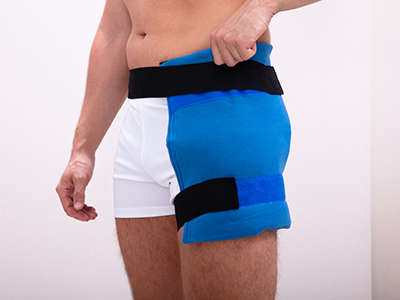
The hip is a ball-and-socket joint that connects the thigh bone to the pelvic bone. As a major weight-bearing joint with a wide range of motion, the hip is susceptible to various kinds of injuries.
-

Physical therapy is an exercise program that helps you to improve movement, relieve pain, encourage blood flow for faster healing, and restore your physical function and fitness level.
Conditions
-
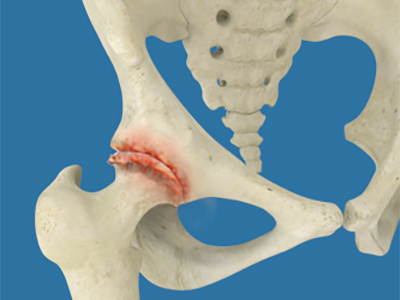
Osteoarthritis, also called degenerative joint disease, is the most common form of arthritis. It occurs most often in the elderly.
-
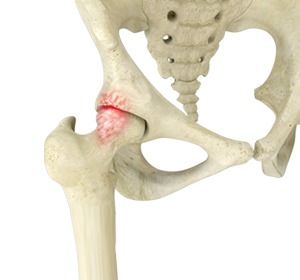
Femoroacetabular impingement (FAI) is a condition characterized by excessive friction in the hip joint from the presence of bony irregularities. These cause pain and decreased range of hip motion.
-
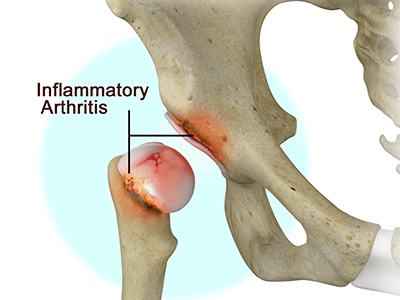
The inflammation of the joints is referred to as arthritis. Inflammation arises when the smooth lining called cartilage at the ends of bones wears away.
-
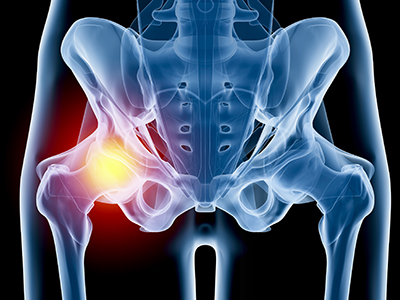
A hip fracture is a break that occurs near the hip in the upper part of the femur or thighbone.
-
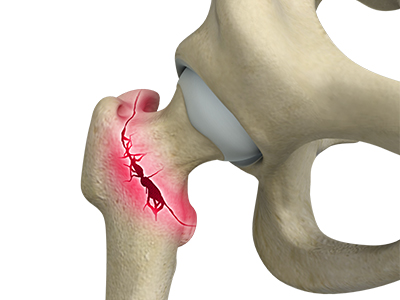
The hip joint is a “ball and socket” joint. The “ball” is the head of the femur or thighbone, and the “socket” is the cup-shaped acetabulum.
-
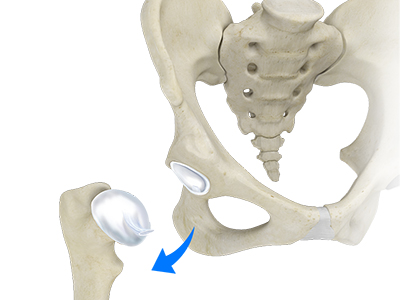
The hip joint is a “ball and socket” joint. The “ball” is the head of the femur or thighbone, and the “socket” is the cup-shaped acetabulum.
-
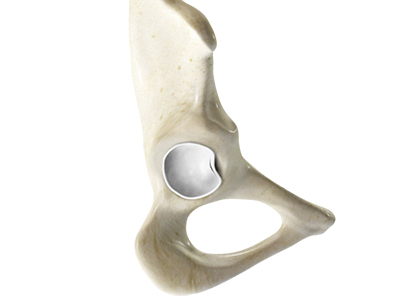
A hip labral tear is an injury to the labrum, the cartilage that surrounds the outside rim of your hip joint socket.
-
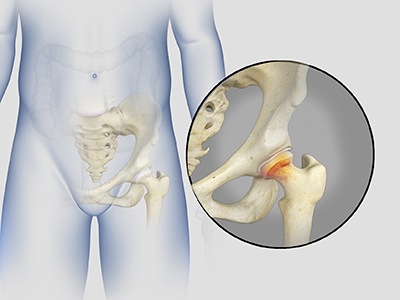
Irritable hip, also known as acute transient synovitis, is a common disorder of childhood characterized by hip pain and limping.
-
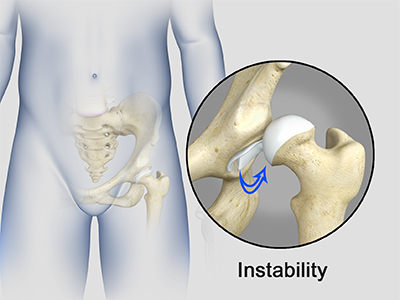
Injury or damage to these structures can lead to a condition called hip instability when the joint becomes unstable.
-
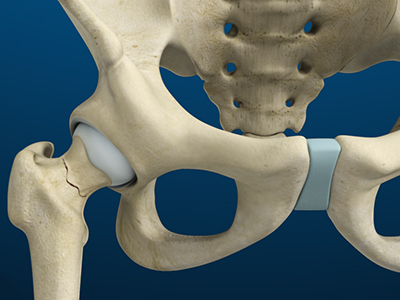
Stress fractures of the hip are a break in the upper part of the thigh bone (femur) that fits into the socket of the hip joint.
-
-
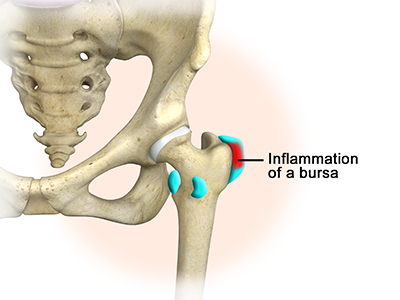
Hip bursitis is a painful condition caused by the inflammation of a bursa in the hip. Bursae are fluid-filled sacs present in the joints between bone and soft tissue to reduce friction and provide cushioning during movement.
-
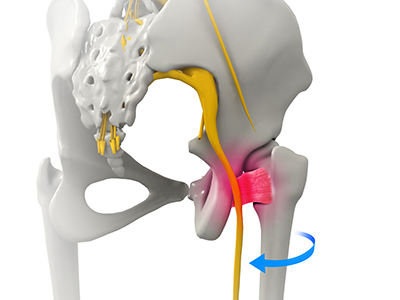
Ischiofemoral impingement is a condition in which there is an abnormal contact (impingement) between the soft tissues of the thigh bone and hip due to the narrowing of space between the lesser trochanter and ischium, resulting in significant hip pain.
-
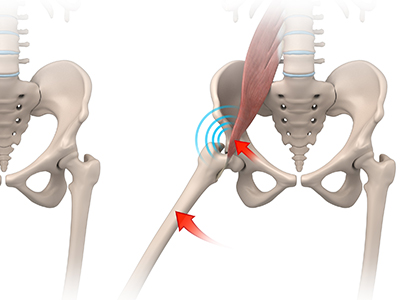
Iliopsoas impingement also known as internal snapping hip syndrome is a condition characterized by inflammation and pain in the iliopsoas muscles resulting in abnormal movement of the hip.
-
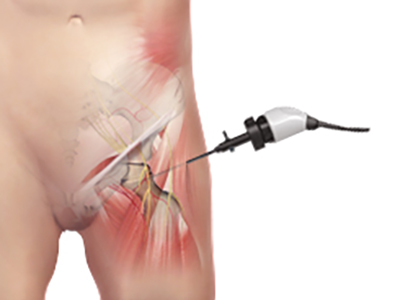
Snapping hip syndrome is a condition in which you hear or feel a snapping sound in the hip when you swing your legs, run, walk or get up from a chair.
-
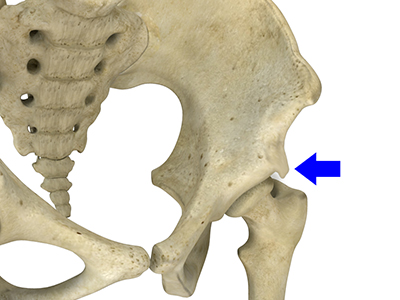
Subspine impingement, also known as anterior inferior iliac spine impingement, is a hip condition characterized by excessive friction caused by bony irregularities on the extraarticular (outside of the joint) surfaces of the hip bones rubbing against each other.